
Problem
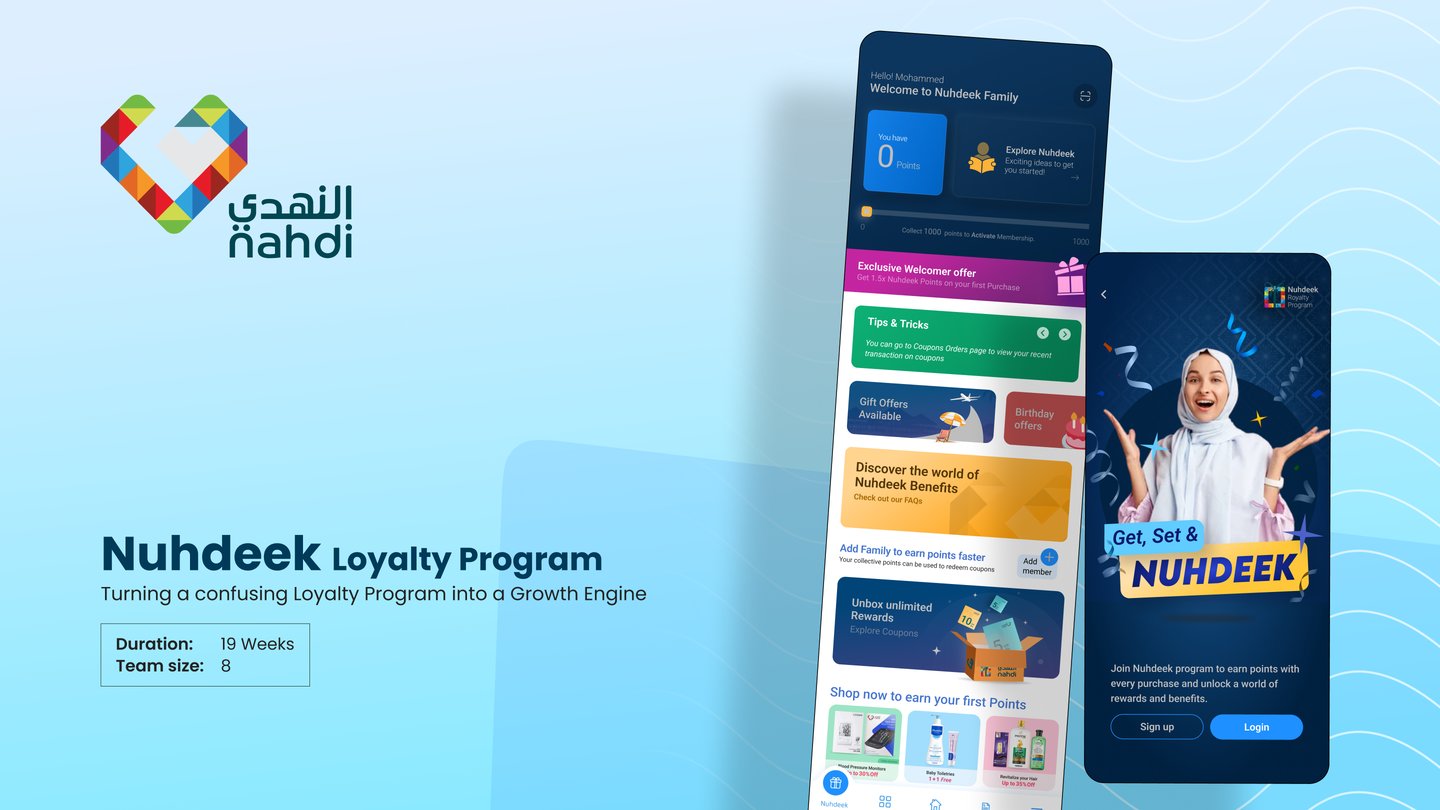
Nahdi, one of the leading pharmacy chains in Saudi Arabia, already had an existing loyalty system (Nuhdeek) where users earned points and redeemed coupons. However, engagement dropped after initial use, and users struggled to understand how rewards worked across different mechanisms. To address this, we introduced a cashback program aimed at increasing repeat purchases and simplifying reward understanding.
Context
Users faced two key challenges:
Lack of clarity
Users could not clearly differentiate between cashback and points, leading to confusion and low engagement.Business risk
Introducing cashback created a loophole where users could exploit the system by purchasing items, earning rewards, and returning products.
The challenge was to design a system that:
simplify reward understanding
encouraged repeat purchases
prevented misuse without compromising user experience

To uncover why users struggled with rewards, we focused on understanding behavior, not just feedback:
Analyzed how users interacted with the Nuhdeek system to identify drop-offs
Conducted targeted interviews to understand expectations around rewards
Benchmarked cashback patterns to identify what drives engagement
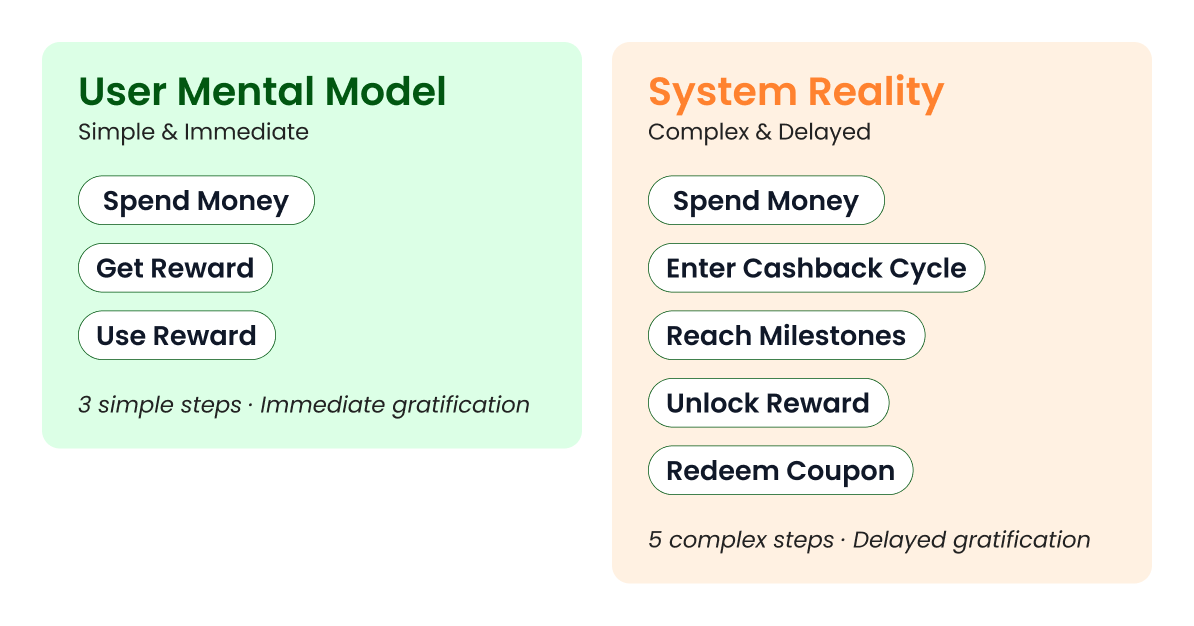
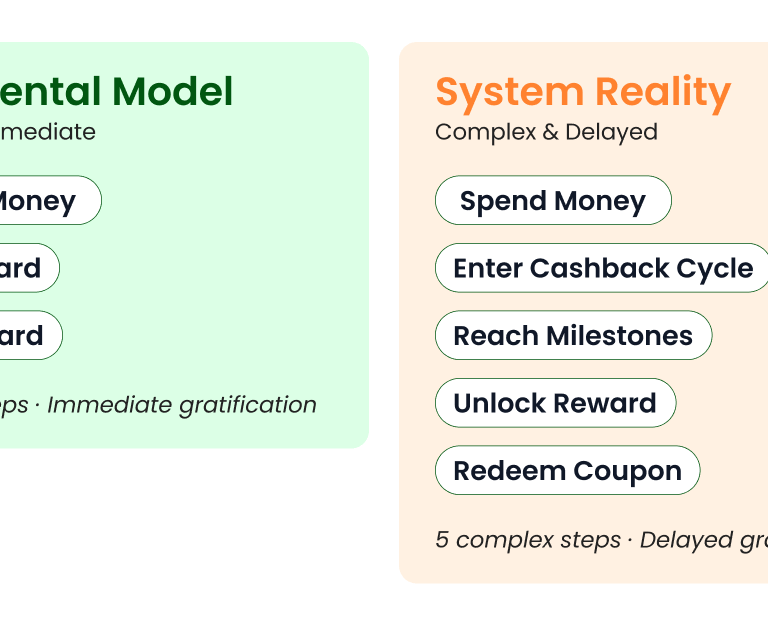
The Mental Model Gap

Research approach
This shifted our focus from what users say to how they actually behave within the system.
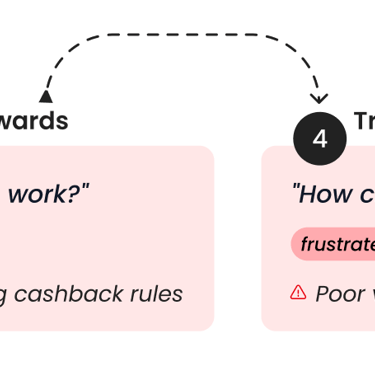
User Journey Map
Key friction points:
Users couldn’t form a clear mental model of how cashback works
Lack of progress visibility broke motivation loops
Delayed rewards created uncertainty at key moments
Mental Model Gap
This mismatch between expectation and system behavior was the core reason for confusion and low engagement.
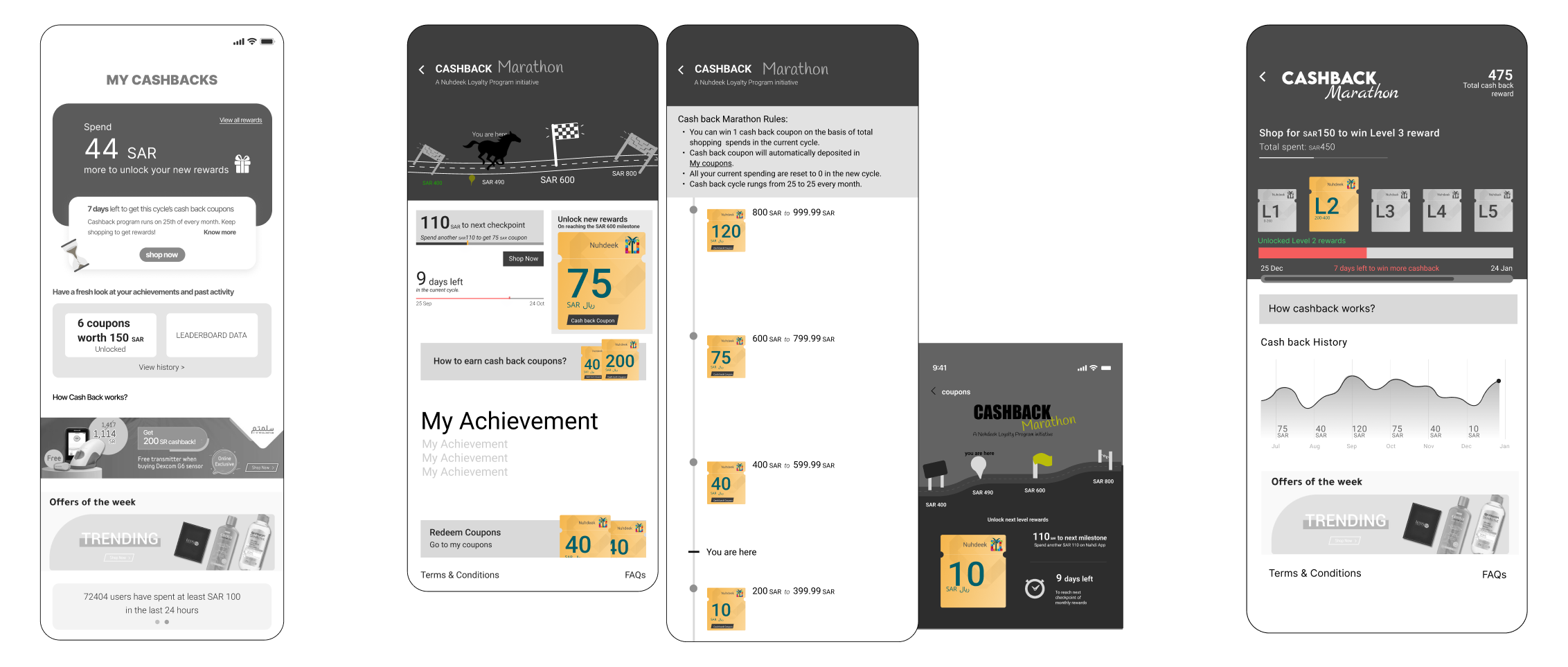
Based on insights around clarity, engagement, and cognitive load, we explored three key design directions.
Exploring Design Directions
Strength: Easy to understand, low cognitive load
Limitation: Lacked engagement and motivation
Minimalistic Model
Gamified / Racing Model
Strength: Strong engagement and progress visibility
Limitation: Introduced complexity
Level-Based Model
Strength: Simplified mental model and scalable
Limitation: Reduced transparency
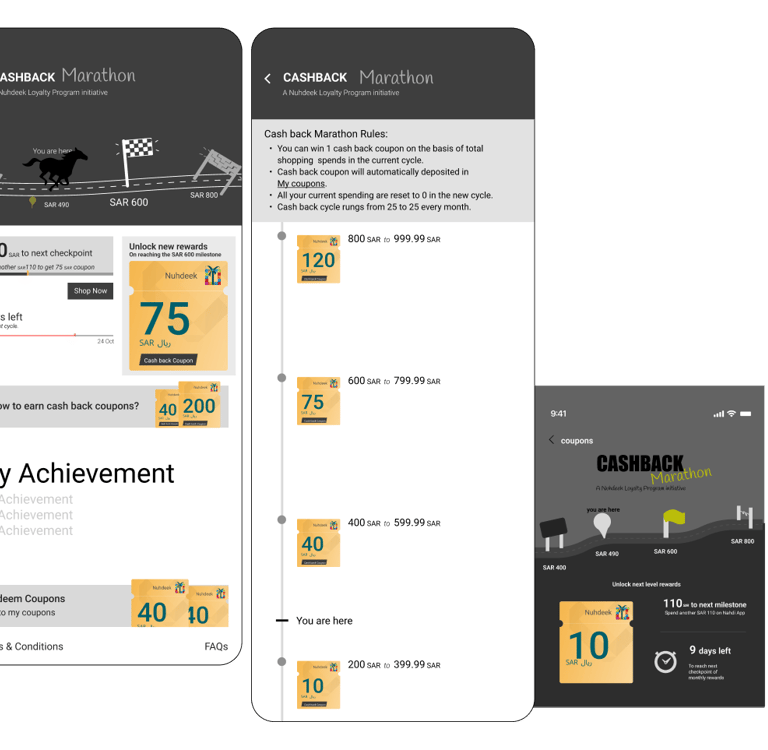
We combined:
Shortlisting & Refinement
progress-based engagement from the racing model
simplified structure from the level-based model
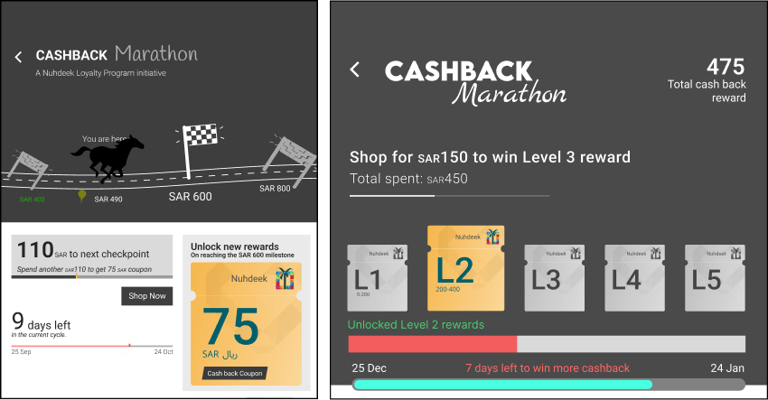
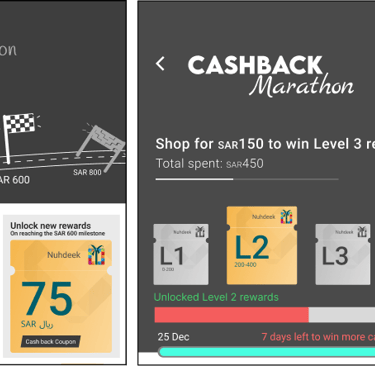
This allowed us to:
maintain motivation through visible progress
reduce cognitive load
create a scalable reward system
Outcome & Implementation
Integration with ‘Nuhdeek Loyalty Program:
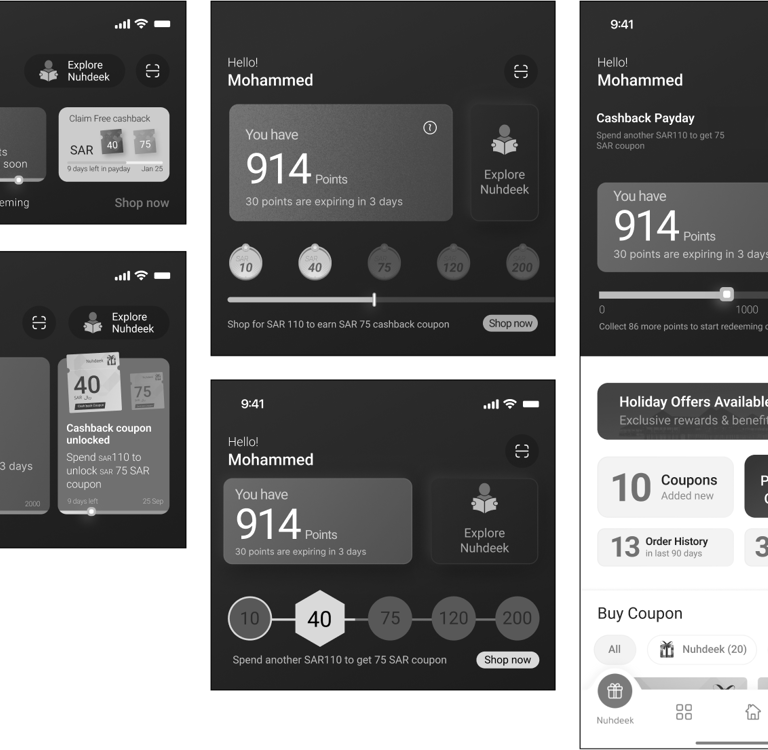
We created a user-friendly interface in the Nahdi app that aligns with the ‘Nuhdeek Cashback Program for easy navigation and tracking.
Progress Visualization: We added progress bars to clearly show spending progress towards rewards.
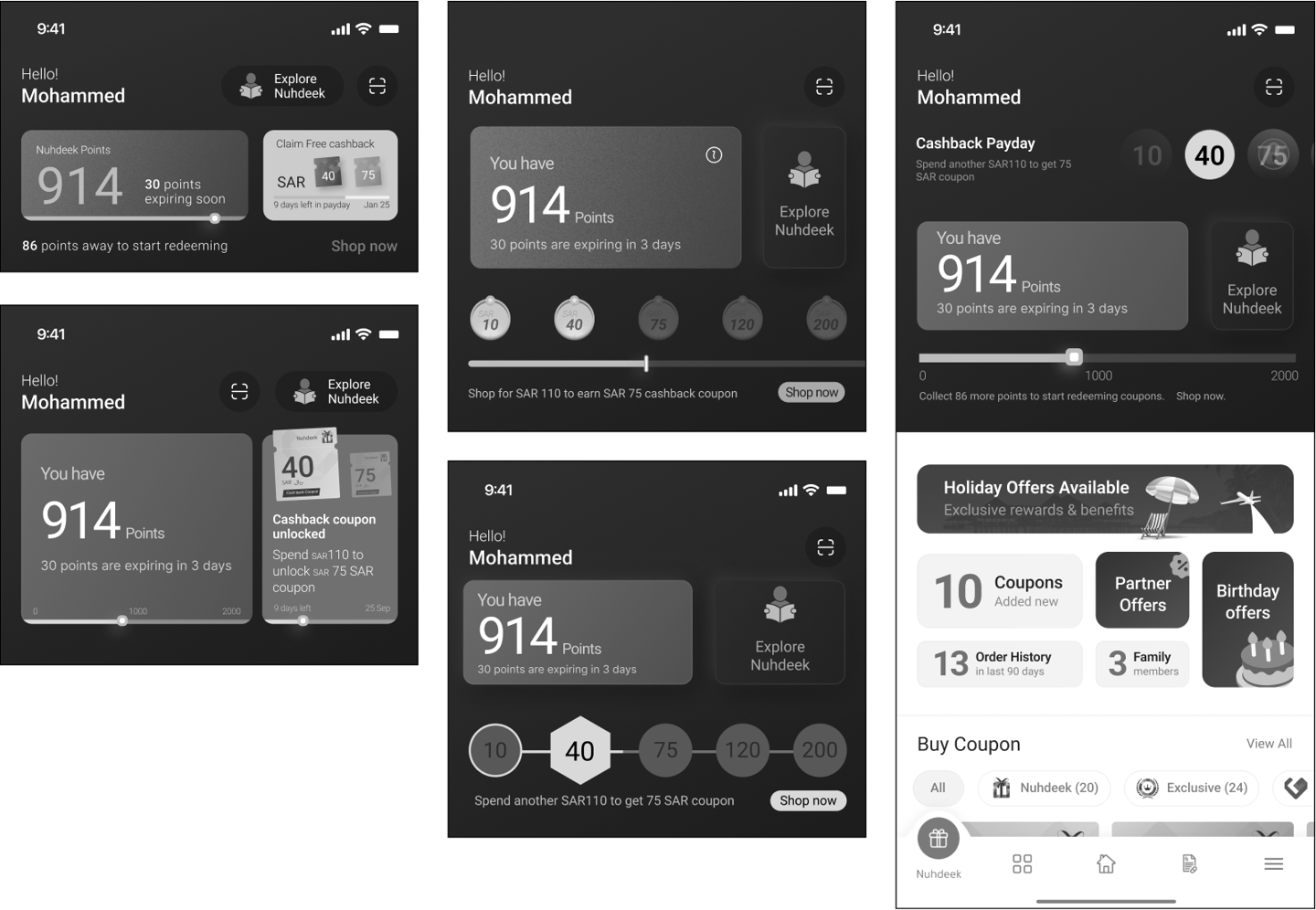
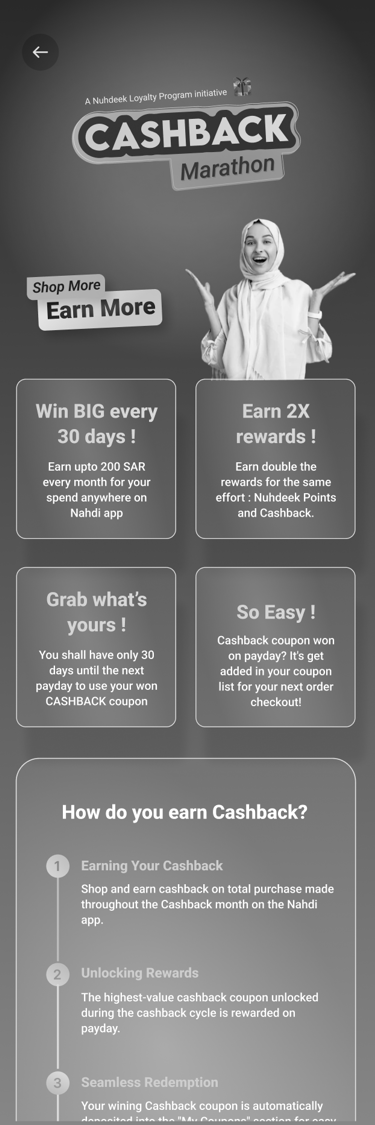
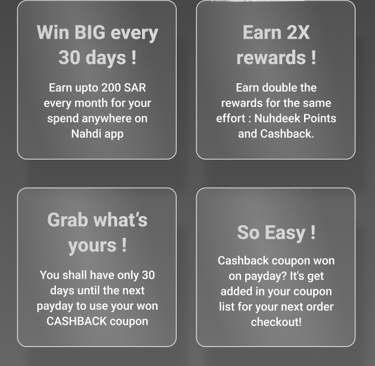
Cashback Info Page: Created a page to inform users about program details and rules.
Onboarding Plan: Developed a strategy to introduce new users to the cashback program and its benefits.
Final Experience
We designed a cashback experience that simplifies rewards, improves engagement, and prevents misuse without disrupting user flow.
What Changed?
Users can clearly track their progress toward rewards
Rewards feel immediate while still adapting to returns
Cashback rules are visible and easy to understand (See Fraud prevention strategy)
The system discourages misuse without restricting users
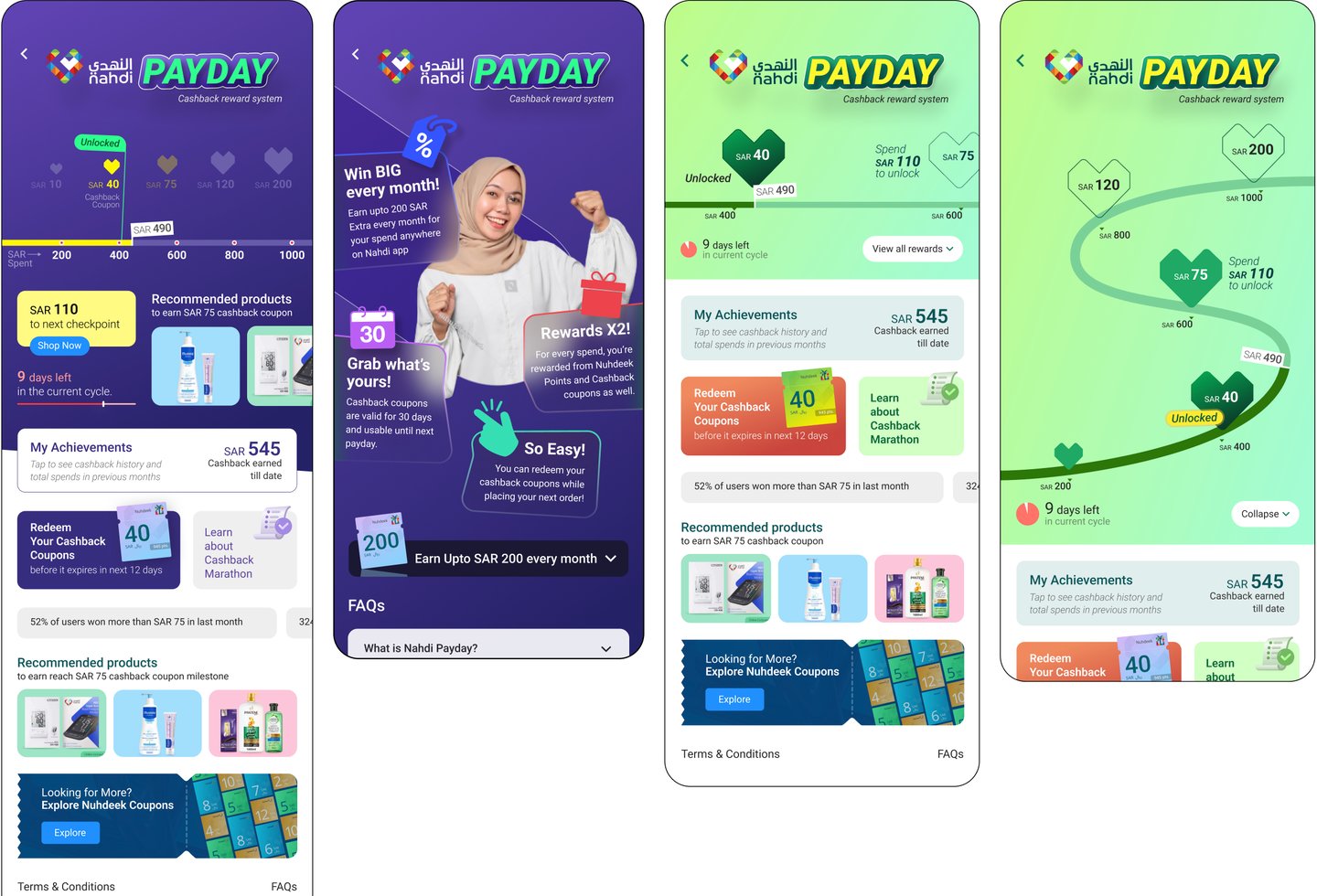
Business & User Impact
Reduced risk of cashback exploitation through system-driven adjustments
Increased clarity around rewards, improving user confidence
Strengthened engagement by maintaining instant gratification
Created a scalable model for future reward programs
Explore Fraud Prevention Case Study
While designing the cashback experience, a deeper challenge emerged.
Users could exploit the system through purchase and return cycles, creating a conflict between business risk and user experience.
Click CTA to see the case study
Nuhdeek Loyalty Program
Click too see how we turned a Confusing Loyalty Program into a Growth Engine